

- Piazze e strade
- Via Roma, Crucoli, Crotone, Calabria, 88812, Italia
Description
Old Town of Crucoli
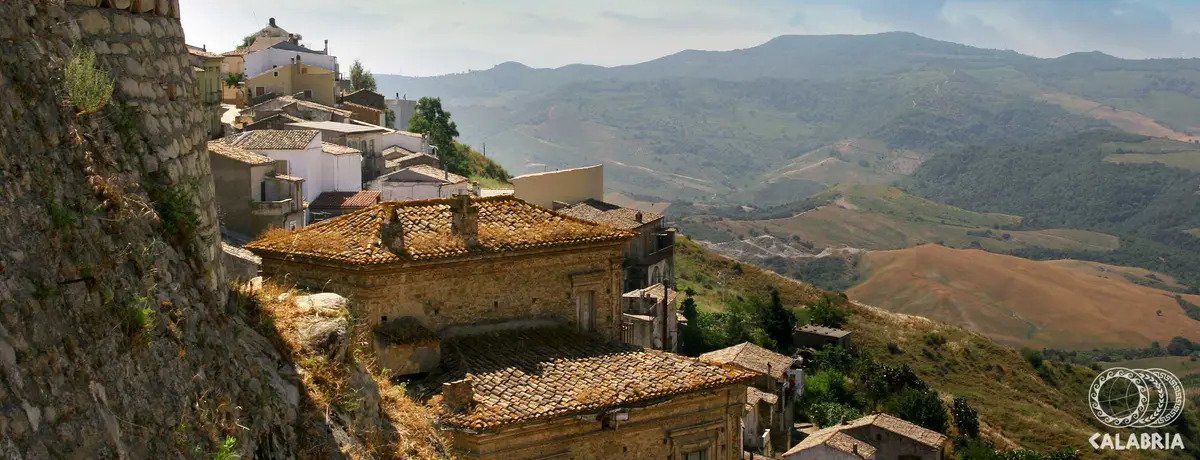
Crucoli’s main town rises on a hill about six kilometers from the sea, surrounded by the Sila mountains and other nearby ranges, including Mount Elo. Its territory extends from the Gulf between Punta Alice and the mouth of the Nicà River.
There are several—and often conflicting—theories about the origin of the name "Crucoli" and the town’s foundation. It may derive from "Curùculum", meaning “a place on a hilltop”, or from "Ocriculum", meaning “small mountain”, a diminutive of Ocris. In both cases, the name clearly refers to the town’s elevated position.
As for its origins, historians have offered many interpretations and hypotheses. According to some, Crucoli was one of the seven Brettian settlements, and for several centuries belonged to the Giustizierato of Valle Crati and Terra Giordana, later to the province of Calabria Citra Nethum, whose capital was Cosenza. Then, on May 1st, 1816, along with 22 other municipalities north of the Neto River, it became part of what is now the province of Calabria, today divided into Catanzaro and Crotone. Other historians argue that Crucoli originated as a medieval village during the Norman era, noting the absence of significant Byzantine elements.
The heart of the old town is Piazza Di Bartolo, around which the main streets and most characteristic alleyways (rughe) and districts (rioni) are laid out, such as Portella, Scaccera, Lamanna Street, Via Santa Maria, Via San Pietro, Fosso, and Cozzo.
Crucoli is one of the few places that still preserves the authentic features of traditional villages: tightly packed houses with sloping roofs, narrow lanes winding under arches and external stairways, noble palaces with arched doorways and central friezes, and the majestic castle overlooking the town.
In recent months, 100 artistic terracotta plaques have been installed along the alleyways and neighborhoods around the castle. These plaques display traditional proverbs from Crucoli’s popular culture, curated by Cultural Affairs Councillor Giuseppe Barberio, taken from his 2000 publication "Crucuddru beddru, pajisu nostu".
Visitors can discover these plaques simply by walking through the town, following two themed routes focused on friendship and gender equality. This initiative serves a dual purpose: to revive Crucoli’s cultural roots, especially for younger generations, and to offer tourists a welcoming image of a “Friendly Town”—a place open to dialogue, respectful of others, and committed to values of hospitality and inclusion. These values are more essential than ever for a peaceful and civil society.
Photo credit: Calabria Straordinaria