

- Comune
- Strada Provinciale 1 Crucolese, Crucoli, Crotone, Calabria, 88812, Italia
Description
Townhall of Crucoli
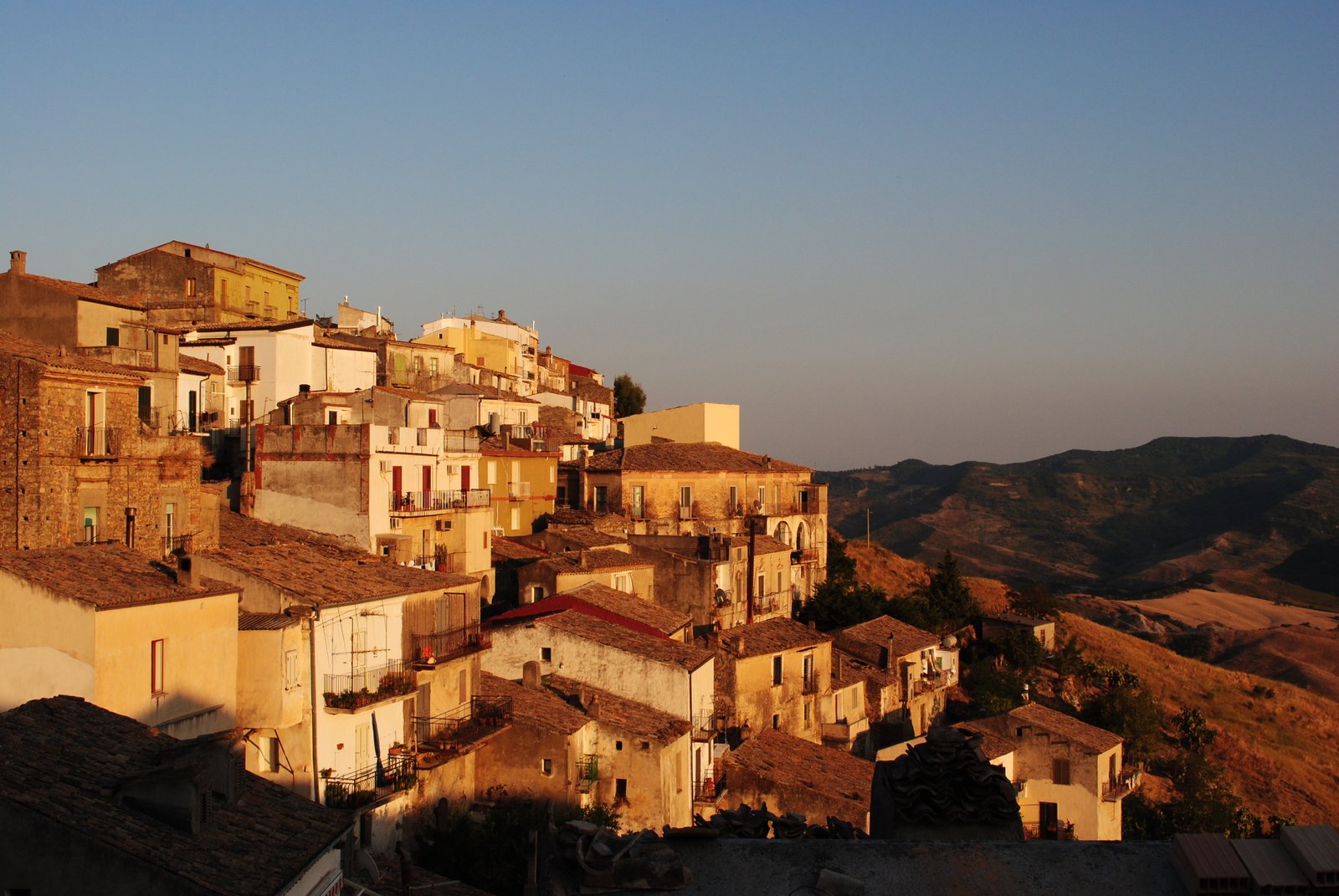
Ocriculum, today's Crucoli, is one of the seven Brettian settlements mentioned by Livy as ignobiles (natives). The town of Crucoli is one of the few that still preserves the features of old villages. Many interesting buildings have arched entrance portals with a central frieze. A small but complete castle dominates the town.
A few kilometers from the town lies the hamlet of Torretta, along State Road 106. It seems to take its name from two small towers, one of which was demolished in 1925. Next to the remaining tower is the Amalfitani Manor, consisting of an internal courtyard with ogival arches, a corner turret, and the coat of arms of Count Amalfitani of Naples, placed above the entrance facade.
Coming from the north, Crucoli is the first town on the Ionian side of the Province of Crotone. It rises on a hill 377 meters above sea level, offering a double panorama: the sea and the mountains of the Sila. It borders, besides the Ionian Sea, the municipalities of Umbriatico, Cirò, and, in the Province of Cosenza, Cariati, Terravecchia, and Scala Coeli. It covers an area of 4.981 km² and has a beach of about 7 km. It is located 52 km from Crotone.
From forests to sea, Crucoli offers more than one opportunity for tourists. Its beach is very popular during the summer months, thanks in part to the crystal-clear waters of the Ionian Sea, which attract bathers from all over Italy. The mountains are just a short distance away, and with their lush vegetation, they are a real treat for hiking and picnic lovers.
Of course, a thorough visit to the old town is a must, with its twelve characteristic districts: Scaccera, Portella, Sotto il Ponte, Motta, Scarpa, Tropea, Fosso, Annunziata, Cozzo, Croci, Mendolilla, and Sant’Antonio. After winding up the switchbacks lined with high dry-stone walls, reaching the town center, it is a true delight to get lost in the narrow alleys that weave between old houses, occasionally slipping under tall and narrow arches.